Science-backed recipe

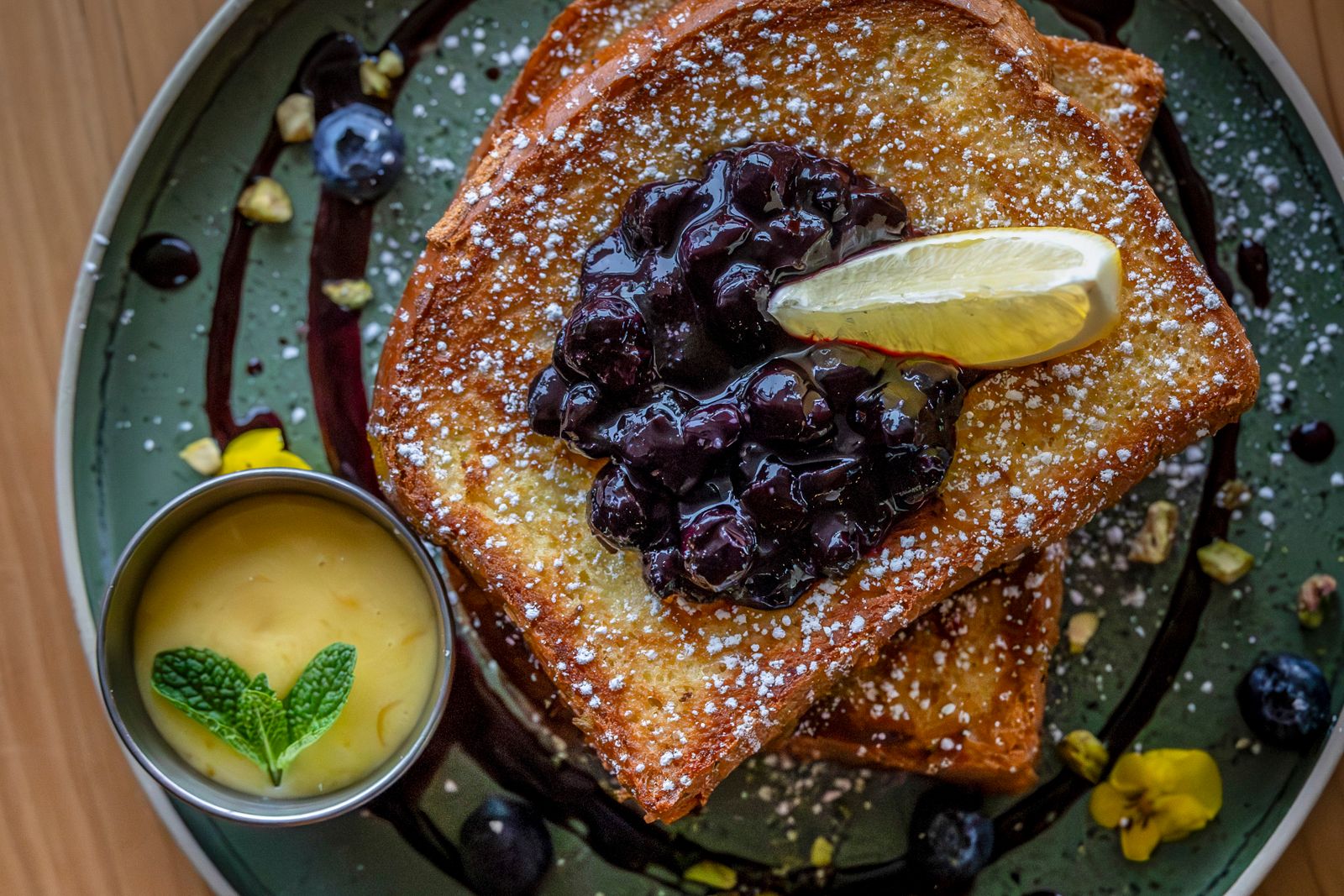
Walnut-Raisin Brioche French Toast with Blueberry Maple Syrup

Thick walnut-raisin brioche (or store-bought cinnamon raisin bread) soaked in a maple-sweetened custard with cinnamon and a hint of vanilla, cooked low and slow in butter, then finished with a quick blueberry syrup. Every step comes with the science of why it works.

Active
45 min
Prep
15 min
Total
45 min
Serves
4
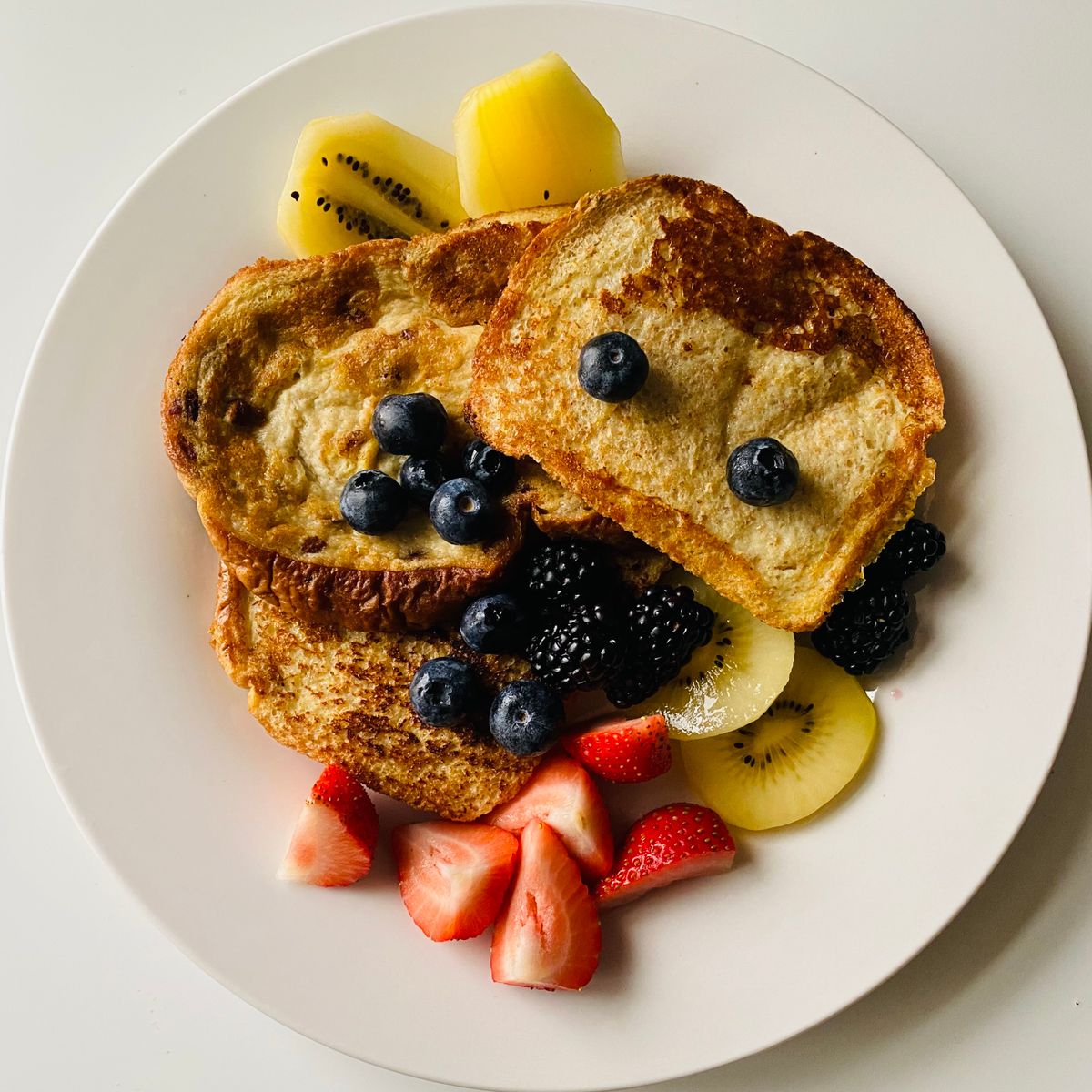
Brioche French toast topped with blueberry compote

Photo: Pexels

Why this recipe works

  • ✓
    Brioche, built for custardIts butter-and-egg crumb soaks up custard without falling apart.
  • ✓
    Maple instead of sugarA liquid sweetener that blends in instantly and browns beautifully.
  • ✓
    Walnuts and raisins in every biteBaked right into the bread, so every slice has crunch and pockets of sweetness.
  • ✓
    Low heat, custardy centerButter and gentle heat set the inside before the outside can burn.

What makes French toast work?

French toast is bread soaked in a custard of eggs and dairy, then cooked in butter. The goal is two textures at once: a golden, lightly crisp outside and a soft, custardy inside that’s fully set.

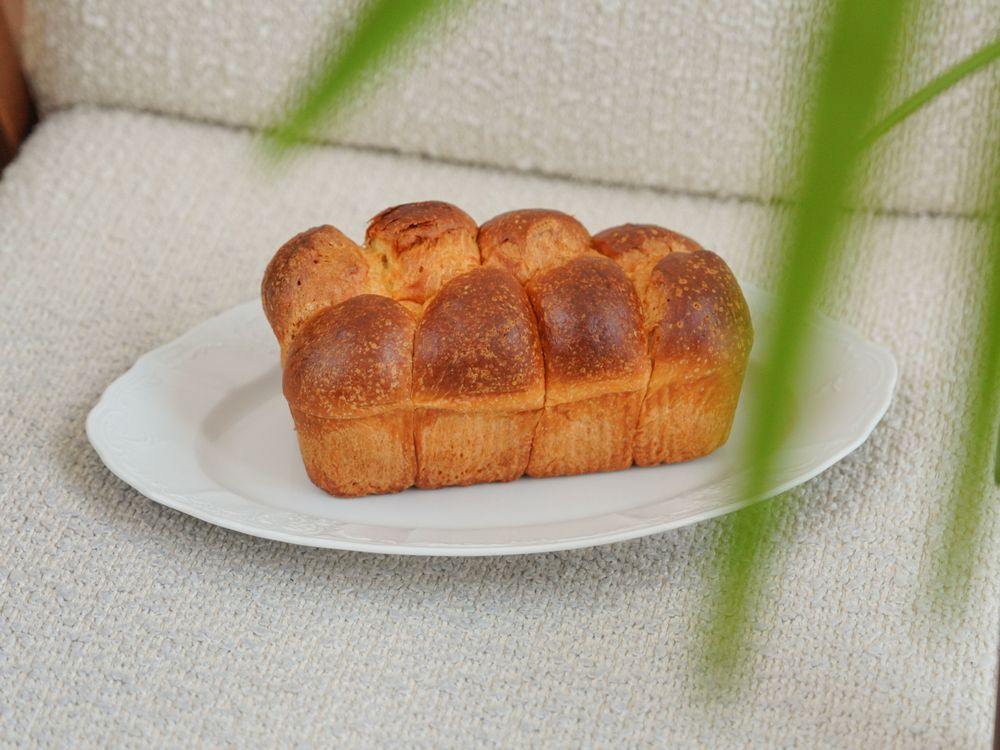
The bread matters most. Brioche is an enriched bread made with eggs, butter and a little sugar, so its crumb is tender but strong enough to soak up a rich custard without turning to mush. This version uses brioche with walnuts and raisins baked in. Store-bought cinnamon raisin bread works too.

A golden loaf of brioche bread on a white plate

Meet the ingredients

Here’s everything you’ll need, with Hindi and Urdu names where a Desi kitchen has one, plus what each ingredient is doing in the dish.

A golden loaf of brioche bread on a white plate

Walnut-raisin brioche

An enriched bread made with eggs, butter and a little sugar, here with walnuts and raisins baked in. Store-bought cinnamon raisin bread is an easy swap. Buy a whole loaf so you can slice it thick.

Its job: Its rich, tight crumb soaks up custard without falling apart. Day-old brioche absorbs even better.
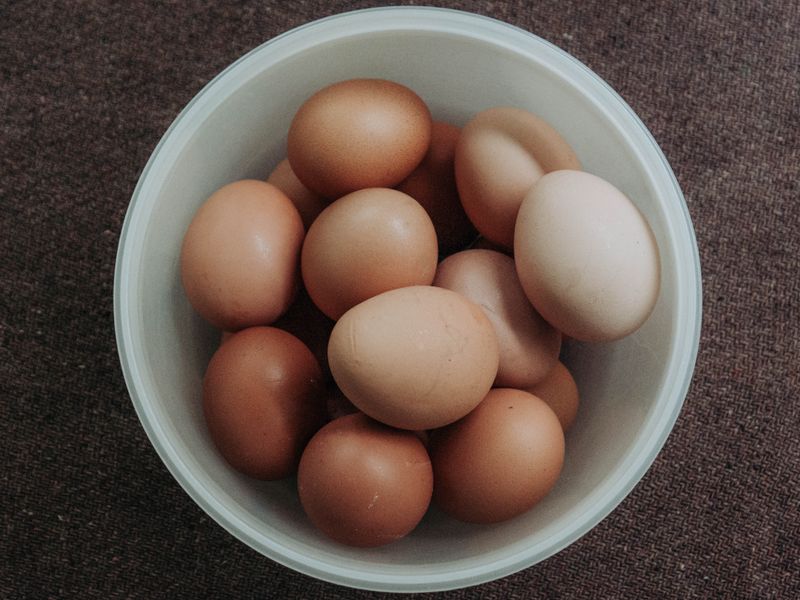
A bowl of brown and white eggs

Eggs

अंडेانڈے
aṇḍe

Large eggs: 3 per serving, 12 for this batch.

Its job: Their proteins set when heated, turning the liquid soak into a soft custard inside the bread.
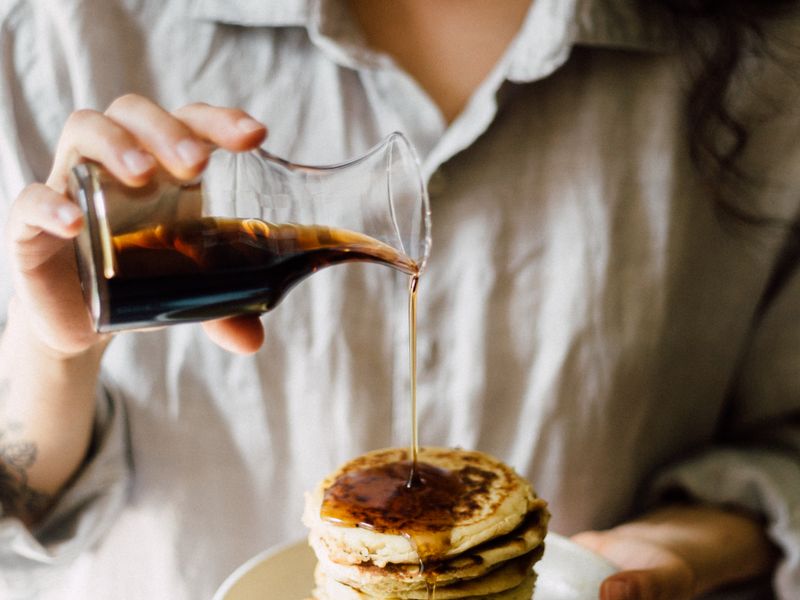
Maple syrup being poured from a small bottle

Maple syrup

Pure maple syrup, not pancake syrup, which is mostly corn syrup with flavoring.

Its job: Sweetens the custard in place of sugar and helps the outside brown. It also goes into the blueberry syrup.
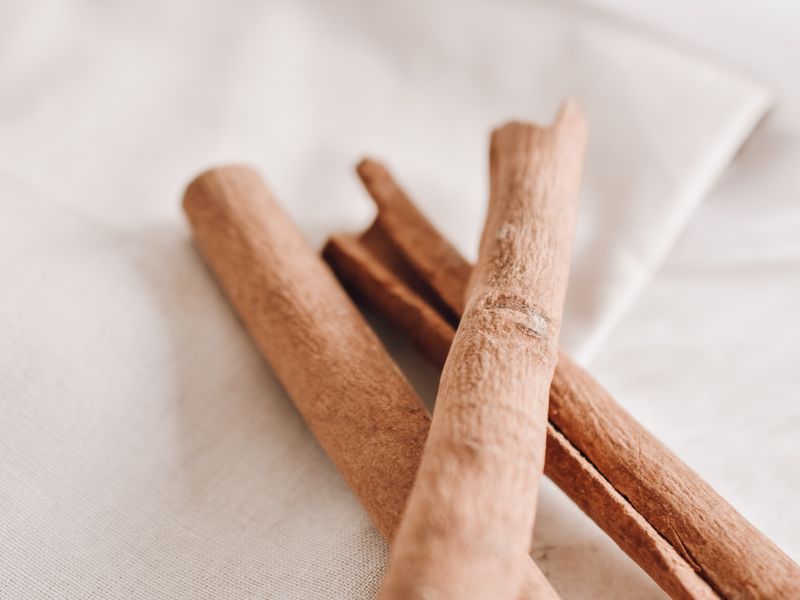
Cinnamon sticks on a white surface

Cinnamon

दालचीनीدار چینی
dālchīnī

Ground cinnamon, from the dried inner bark of the cinnamon tree.

Its job: Warm, sweet spice. Its main aroma compound, cinnamaldehyde, is carried by the fat in the custard.
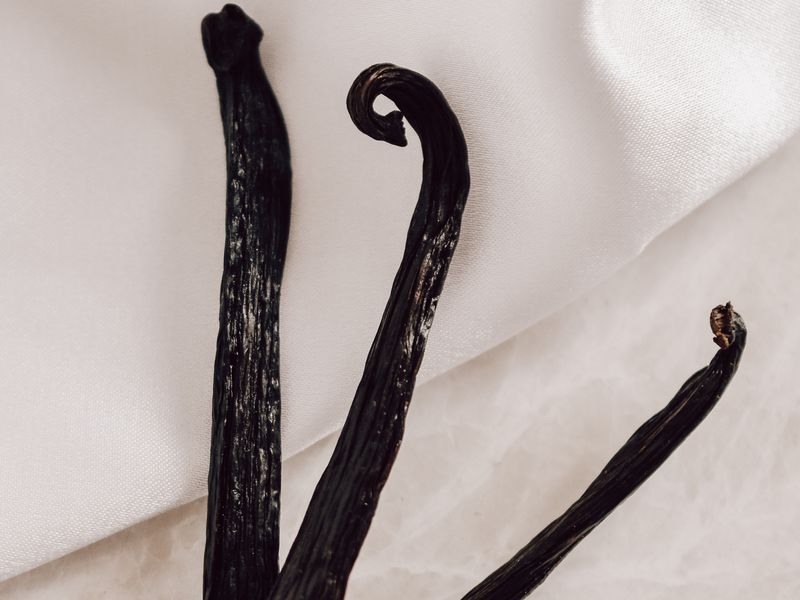
Dark vanilla beans on a white surface

Vanilla

Pure vanilla extract, made by steeping vanilla beans in alcohol.

Its job: Just a hint rounds out the custard. Too much tastes boozy.
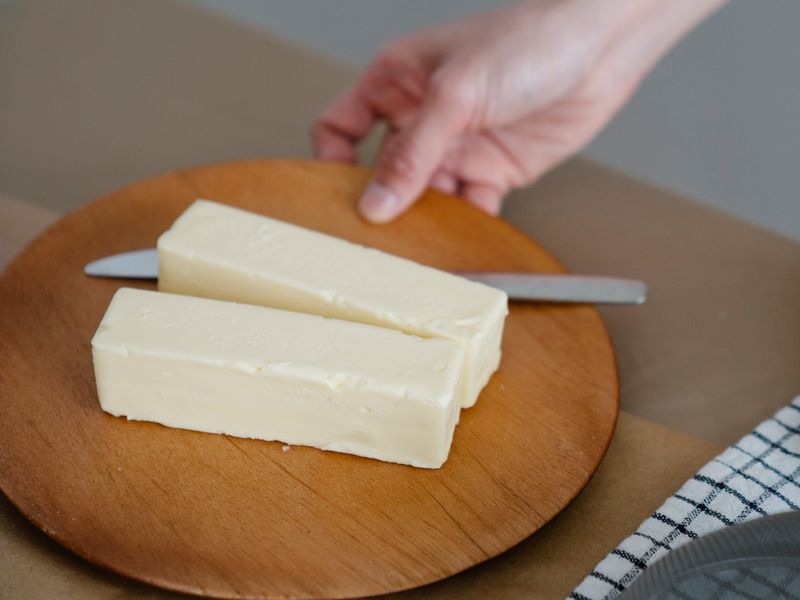
A block of butter on a wooden plate

Butter

मक्खनمکھن
makkhan

Unsalted butter, for the pan.

Its job: Flavor and browning. Its milk solids brown at a fairly low temperature, one reason this cooks on low.
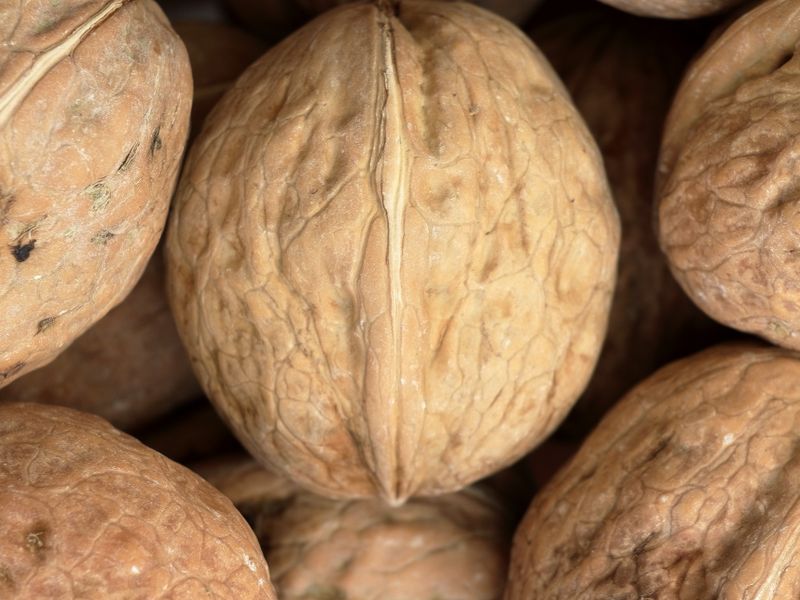
Close-up of walnuts

Walnuts

अखरोटاخروٹ
akhroṭ

Baked into the bread.

Its job: Crunch against the soft, custardy toast.
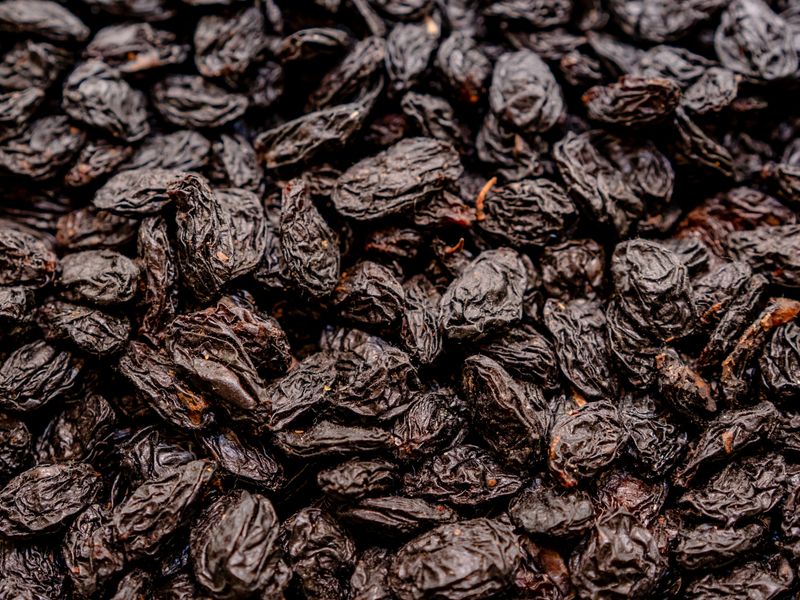
A pile of dark purple raisins

Purple raisins

काली किशमिशکالی کشمش
kālī kishmish

Dark raisins, dried from dark grapes, baked into the bread.

Its job: Pockets of sweetness that caramelize where they touch the pan.
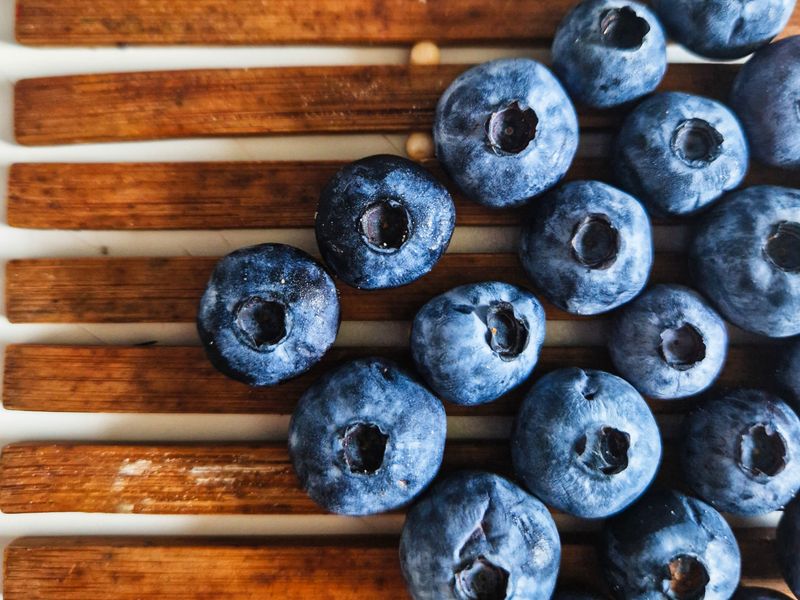
Fresh blueberries

Blueberries

Fresh or frozen blueberries both work.

Its job: Cooked down with a little sugar and maple syrup into a quick, glossy syrup.
The lab notes

The science behind every step

Restaurant cooks do these things by habit. Here’s what each step is actually doing to the food, so you can cook by understanding instead of guesswork.

Lab note01

Use brioche, ideally a day old

Slice the brioche about 1 inch thick. Day-old bread, or slices left out for an hour or two, works best.

Brioche is made with eggs and butter, which give it a tender but sturdy crumb that can hold a lot of custard. As bread sits out it loses moisture and its starches firm up (a process called retrogradation), so drier slices soak up custard like a sponge instead of collapsing. Thick slices leave room for a soft center and a crisp outside.

Lab note02

The custard ratio

3 eggs per serving, whisked with half-and-half or milk.

Eggs and dairy together make a custard. When heated, egg proteins unfold and link up, turning the liquid into a soft, set gel inside the bread. Three eggs per serving makes this version rich and custardy. Half-and-half adds fat, which coats those proteins and keeps the custard tender instead of rubbery; milk works too, with a slightly lighter result.

Lab note03

Maple syrup instead of sugar

Whisk the maple syrup straight into the custard.

Granulated sugar dissolves slowly in cold eggs and dairy and can sink to the bottom of the bowl. Maple syrup is already a liquid, so it blends in instantly and sweetens every slice evenly. Its sugars also brown on the hot pan through caramelization and the Maillard reaction, which is why maple-sweetened French toast colors quickly and needs gentle heat.

Lab note04

Spices that dissolve in fat

Cinnamon, a hint of vanilla and a pinch of salt go into the custard.

The main aroma compounds here, cinnamaldehyde in cinnamon and vanillin in vanilla, dissolve better in fat than in water, so the fat in the yolks and half-and-half carries them through the bread. A small pinch of salt makes the sweetness taste rounder and fuller.

Lab note05

Whisk until smooth

Whisk until no streaks of egg white remain.

Egg whites and yolks set at different temperatures and into different textures. Streaks of unmixed white cook into rubbery white patches on the toast, so whisk until the custard is one even color.

Lab note06

A quick soak

Dip each slice for about 15–20 seconds per side.

Brioche is soft and absorbs custard fast. A brief soak lets the custard reach the center; a long one saturates the crumb until it tears or stays wet in the middle.

Lab note07

Butter and low heat

Cook in butter over medium-low heat, about 3–4 minutes per side.

Two things happen at once: the outside browns while the custard inside heats up and sets. Butter’s milk solids and the maple sugars brown quickly, so high heat would burn the outside before the center cooks. Low, steady heat gives the inside time to set while the outside turns deep golden. For safety, egg dishes are done at 160°F (71°C); the center should spring back when pressed.

Lab note08

Blueberry syrup: burst, mash, reduce

Cook blueberries with a little sugar and maple syrup, mash them once they start releasing juice, then simmer until syrupy.

Heat breaks down the berries’ cell walls, so they burst and release their juice. Mashing at that point frees more juice and pectin, the natural fiber that thickens fruit as it cooks with sugar. As water evaporates the syrup thickens, and it thickens more as it cools, so take it off the heat while it’s still pourable. Its deep purple color comes from anthocyanins, pigments that turn redder with more acid.

Lab note09

Raisin bread browns faster

Keep the heat on medium-low and turn the slices once.

Raisins are roughly 60% sugar by weight, and wherever they touch the hot pan that sugar caramelizes, then scorches, faster than the bread around it. Raisins and walnuts also don't absorb custard, so fruit-heavy slices soak a little faster; a brief dip is enough. Gentle heat lets the custard set before the raisins burn, leaving them jammy instead of bitter.

How to make it, at a glance

  1. Make the blueberry syrupAdd the blueberries, sugar and maple syrup to a small saucepan over medium heat. When the berries start to burst and release their juice, about 3–5 minutes, mash them with a fork or potato masher. Simmer 3–5 minutes more until syrupy, then keep warm on low.
  2. Whisk the custardIn a wide, shallow dish, whisk the eggs, half-and-half, maple syrup, cinnamon, vanilla and salt until completely smooth, with no streaks of egg white.
  3. Soak the breadDip each slice in the custard for about 15–20 seconds per side and let the extra drip off.
  4. Cook low and slowMelt about 1 tbsp butter in a large skillet over medium-low heat. Cook the slices in batches for 3–4 minutes per side, until deep golden and the center springs back when pressed (160°F / 71°C). Add more butter between batches.
  5. Keep warmHold finished slices on a rack in a 200°F (95°C) oven while you cook the rest, so they stay crisp.
  6. ServeTop with the warm blueberry syrup and an extra drizzle of maple syrup.

Exact amounts and timings are in the recipe card below.

Questions, answered

Can I use store-bought cinnamon raisin bread?

Yes. Buy a thick-sliced loaf, or a whole loaf you can slice about 1 inch thick. Thin sandwich-style slices soak through too fast and tend to go soggy.

Why brioche instead of sandwich bread?

Brioche is enriched with eggs and butter, so it stays rich and holds together when soaked. Regular sandwich bread is thinner and softer and tends to go soggy. Challah is the closest substitute.

Why is my French toast soggy in the middle?

Usually the heat was too high, so the outside browned before the custard inside could set, or the slices soaked too long. Cook on medium-low and check that the center springs back when pressed.

Can I use sugar instead of maple syrup?

Yes, about 1 tbsp per serving, but whisk until it fully dissolves. Maple syrup blends in instantly and adds its own flavor.

Can I use frozen blueberries?

Yes. Frozen berries release their juice quickly and work just as well; add a minute or two to the cooking time.

About MedRise Food Science

Desi restaurant favorites, recreated at home and explained with food science: every recipe is tested in a home kitchen and comes with the why behind each step.

Sources & further reading